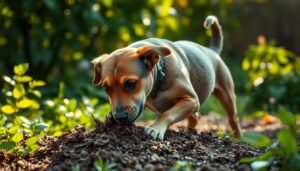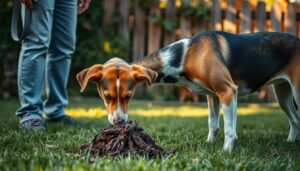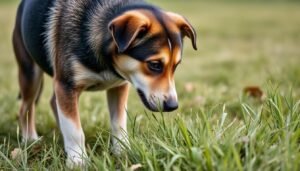

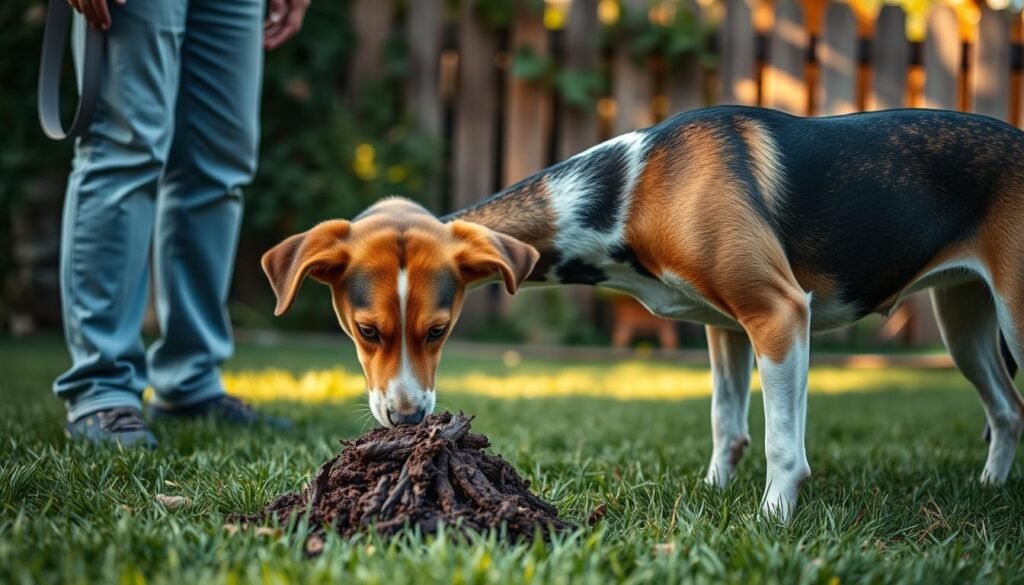
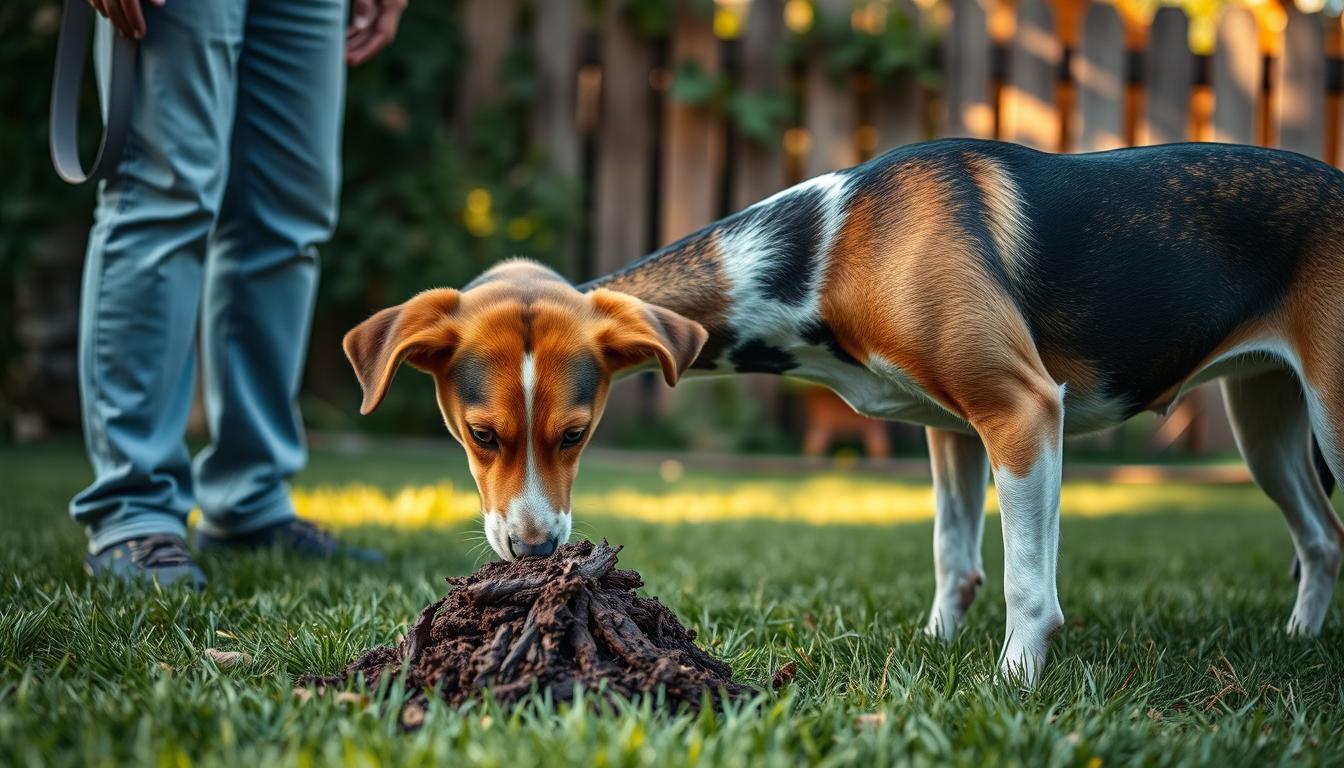
Seeing your dog eat poop can be upsetting. This behavior, called coprophagia, is hard to stop but doable with the right steps. You can teach your dog better habits.
There are many reasons why dogs eat poop, like not getting enough nutrients or being bored. Luckily, there are simple ways to stop your dog from eating poop. Giving your dog a balanced diet can help a lot. You can also try natural remedies like adding apple cider vinegar or digestive enzyme supplements.
Key Takeaways
- Feed a high-quality, balanced diet to meet nutritional needs.
- Immediately pick up droppings to prevent access.
- Supervise your dog during walks to manage behavior.
- Consider adding apple cider vinegar to your dog’s food.
- Use digestive aids like raw zucchini or meat tenderizer.
Understanding Why Dogs Eat Poop
To stop your dog from eating poop, first understand why they do it. This behavior, called coprophagia, has many causes. These include nutritional needs and health problems.
Common Reasons Behind Coprophagia
Dogs eat poop because they might not get enough nutrients. If their food lacks balance, they look elsewhere for what they need. Nutritional deficiencies draw them to feces’ undigested nutrients.
Boredom and lack of mental stimulation also play a part. Dogs need to stay active and mentally sharp. Without enough play, they might eat poop out of boredom or for fun.
Health Issues to Consider
Health problems can also make dogs eat poop. Issues like gastrointestinal upset or malabsorption can lead to this behavior. Parasites or infections can also cause it. According to PetMD, some medical conditions can trigger coprophagia. It’s crucial to check with a vet to rule out health issues.
Understanding why your dog eats poop is the first step to stop it. Knowing if it’s due to nutrition, boredom, or health will help you find the right solution.
Identifying Risk Factors
Understanding the risk factors for coprophagia is crucial. It helps owners prevent this behavior in their dogs. Knowing what makes a dog more likely to eat feces is key.
Breed Predispositions
Some dog breeds are more likely to eat feces. This is because of their genetic makeup. For example, Terriers and Hounds have a strong instinct to forage and scavenge.
| Breed Group | Predisposition to Coprophagia | Reason |
|---|---|---|
| Terriers | High | Strong hunting instinct |
| Hounds | Moderate to High | Scavenging nature |
| Retrievers | Low to Moderate | Generally well-behaved with training |
Environmental Triggers
Environmental factors also play a big role. Dogs in multi-pet homes or small spaces are more likely to eat feces. Keeping things clean and supervising your dog can help prevent this.
By tackling these risk factors, owners can lower the chance of their dogs eating feces. It’s about creating a clean, supervised environment that promotes healthy habits.
Providing a Well-Balanced Diet
Preventing coprophagia starts with a balanced diet for your dog. A diet full of essential nutrients can lower the urge to eat feces. Giving your dog the right nutrients is key for their health and can stop bad behaviors.
Importance of Nutrition
A balanced diet for dogs has proteins, fats, carbs, vitamins, and minerals. Without these, your dog might eat feces and face other health problems. For example, not enough vitamin B or amino acids can make them look for bad food sources.
Choosing the right dog food is crucial. It should match your dog’s age and lifestyle. A vet can help pick the best food for your dog, based on their health and needs.
Nutritional Considerations:
- Make sure your dog gets enough protein from good sources.
- Give them a mix of vitamins and minerals.
- Stay away from fillers and by-products that don’t offer much nutrition.
Supplements That Help
Along with a balanced diet, some supplements can prevent coprophagia. Probiotics and digestive enzymes are good for a healthy gut.
Probiotics improve gut health, helping your dog absorb nutrients better and less likely to eat feces. Digestive enzymes help break down food, making it less appealing to eat feces.
Beneficial Supplements:
- Probiotics for better gut health.
- Digestive enzymes for better nutrient absorption.
- Vitamin B supplements to fix any deficiencies.
By focusing on a balanced diet and adding good supplements, you can lower your dog’s coprophagia. Always talk to a vet before changing your dog’s diet or adding supplements for their health.
Training Techniques to Discourage the Behavior
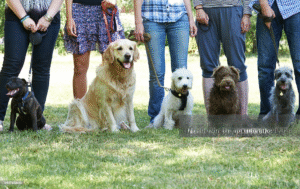
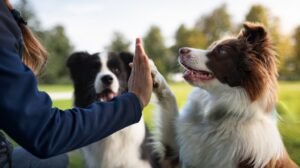
Positive reinforcement training can help your dog stop eating feces. This method rewards good behavior, making learning fun and healthy for your dog.
Positive Reinforcement Methods
Positive reinforcement is a great tool in dog training. It uses treats, praise, or play to reward good behavior. To stop coprophagia, teach your dog to ignore feces. Here’s how:
- Reward Good Behavior: Give treats or praise when your dog ignores feces.
- Be Consistent: Everyone in the family must use the same commands and rewards.
- Use High-Value Rewards: Treats that your dog loves can help them learn faster.
Commands to Teach
Teaching your dog commands can help manage their behavior. Two important commands are “leave it” and “drop it.”
- Leave It: Start by placing a treat in front of your dog and say “leave it.” If they try to take it, say “no” and cover it. Reward them with another treat when they ignore it.
- Drop It: If your dog picks up feces, teach them to “drop it.” Offer a treat in exchange. When they drop the feces, praise them and give them the treat.

Training your dog needs patience, consistency, and positive reinforcement. Teaching the right commands and rewarding good behavior can stop coprophagia. It also strengthens your bond with your pet.You can learn more about how to stop a dog from barking.
Improving Your Dog’s Routine
To tackle coprophagia, look at your dog’s daily routine. A good routine can change their behavior and health for the better.
Increasing Exercise and Playtime
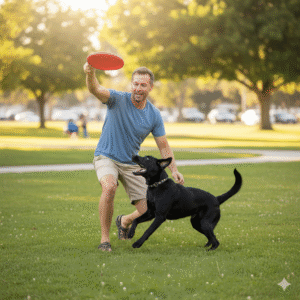
Exercise and play are key for your dog’s health. More of these can cut down on boredom and stress, which lead to coprophagia. Try activities like agility training or scent work to keep their mind and body active. For more tips, check out this helpful resource.
Make sure exercise fits your dog’s age, breed, and health. Puppies need short, frequent exercise, while adult dogs can handle longer, more intense workouts.
Establishing a Regular Feeding Schedule
A set feeding schedule keeps your dog’s hunger in check and stops them from eating other things. It’s also key to give them a balanced diet that fits their nutritional needs.
Here’s a simple way to set up a regular feeding schedule:
| Meal Time | Food Type | Quantity |
|---|---|---|
| 8:00 AM | Breakfast | 1 cup |
| 12:00 PM | Lunch | 1/2 cup |
| 6:00 PM | Dinner | 1 cup |
By making these changes, you can improve your dog’s routine and lower the chance of coprophagia.
Monitoring Your Dog’s Behavior
Watching and writing down your dog’s actions can give you clues about why they eat poop. By paying close attention, you can spot patterns and what makes them do it.
Keeping a Journal of Incidents
Keeping a journal of your dog’s poop-eating can be really helpful. Write down the date, time, and what happened each time. Also, note any changes in their diet, environment, or health.
- Remember what kind of stool they ate (their own, another dog’s, or cat feces)
- Record any changes in diet, environment, or health
- Document any training or corrective actions taken
This info can help you and your vet or dog trainer find the root cause. Then, you can make a plan to stop it.
| Date | Time | Incident Details | Potential Triggers |
|---|---|---|---|
| 02/01 | 08:00 | Ate own stool | New diet introduced |
| 02/03 | 12:00 | Ate another dog’s stool | Visited dog park |
When to Seek Professional Help
If your dog keeps eating poop even after you try to stop it, you might need professional help. Talk to your vet to check for any health problems that could be causing it.You can learn more about how to stop a dog from nail bleeding.
Indicators that professional help is needed:
- Persistent coprophagia despite dietary changes and training
- Signs of illness or nutritional deficiencies
- Changes in appetite, energy, or overall behavior
A vet or certified dog trainer can offer specific advice and support. They can help you tackle your dog’s poop-eating problem.

Providing Alternatives
To stop your dog from eating poop, give them good things to chew on. Offer different options to keep them away from feces.
Chew Toys That Distract
Chew toys are great for keeping your dog’s mind off poop. Look for durable ones made from rubber, nylon, and wood. Here are some good choices:
- Kong toys filled with treats or peanut butter
- Nylabones for dogs who love to chew
- Interactive puzzle toys that keep them busy
Safe Treats for Rewarding Good Behavior
Give your dog safe treats to encourage good behavior. Choose healthy, easy-to-digest options like:
| Treat Type | Benefits | Examples |
|---|---|---|
| Fruit Treats | Rich in fiber and antioxidants | Carrot sticks, apple slices |
| Protein-Rich Treats | Supports muscle health | Freeze-dried liver, chicken strips |
| Grain-Free Treats | Suitable for dogs with dietary restrictions | Potato-based treats, sweet potato chews |
For more tips on stopping coprophagia, check out Healthy Solutions for Pets.
Keeping the Yard Clean
To stop your dog from eating poop, start by keeping your yard clean. A tidy yard looks better and helps break the habit of eating feces in dogs.
Regular Poop Removal
It’s key to remove dog poop from your yard often. This act greatly lowers the chance of your dog eating feces. Scoop up your dog’s poop daily, or more if you have several dogs.
Tips for Effective Poop Removal:
- Use a reliable poop scoop or shovel.
- Dispose of the waste in a sealed bag to prevent odor and mess.
- Clean your poop scoop regularly to prevent bacterial buildup.
Using Dog Repellent Methods
Along with regular poop removal, using repellents can also help. Citrus sprays and motion-activated sprinklers are good at keeping dogs away from poop.
Citrus Sprays: Dogs usually don’t like the smell of citrus. Spraying citrus sprays around can keep your dog from unwanted areas.

Motion-Activated Sprinklers: These devices scare dogs with water when they enter a certain area. This keeps them away effectively.
By removing poop regularly and using repellents, you can greatly reduce your dog’s poop-eating. This makes your yard healthier and more enjoyable for everyone.
Consulting with a Veterinarian
To rule out health issues, it’s key to talk to a vet. If your dog keeps eating poop, a vet can spot any health problems.
Health Check to Rule Out Issues
A full health check is vital to find out why your dog eats poop. Your vet can run tests for issues like malabsorption or gut diseases. These might be why your dog acts this way.You can learn more about how to get rid of dog smell.
Key aspects of a health check include:
- Physical examination
- Blood tests to check for infections or metabolic issues
- Stool tests to identify parasites or gastrointestinal problems
Behavioral Specialists
Also, talking to a behavioral specialist can help. They offer ways to tackle coprophagia from a behavior angle. This can help you better understand and manage your dog’s behavior.
Working with a vet and maybe a behavior expert can help you stop your dog from eating poop. You’ll get a detailed plan to tackle this issue.
Building a Strong Bond with Your Dog
Creating a strong bond with your dog is key to stopping bad habits like eating poop. This bond helps you understand your dog better and lowers stress. Stress often leads to this behavior.
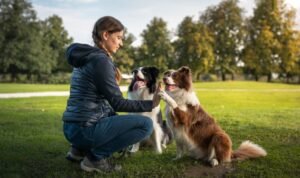
Effective Training Sessions
Training sessions are great for bonding with your dog. They teach new skills and help you get to know your dog’s personality. Using positive methods in training makes your bond stronger.
Creating a Nurturing Environment
A loving home is essential for your dog’s happiness. Make sure your dog feels safe, loved, and active. This can prevent them from eating poop.
Focus on building a strong bond with your dog through training and a caring home. This way, you can tackle the reasons behind coprophagia and stop it.